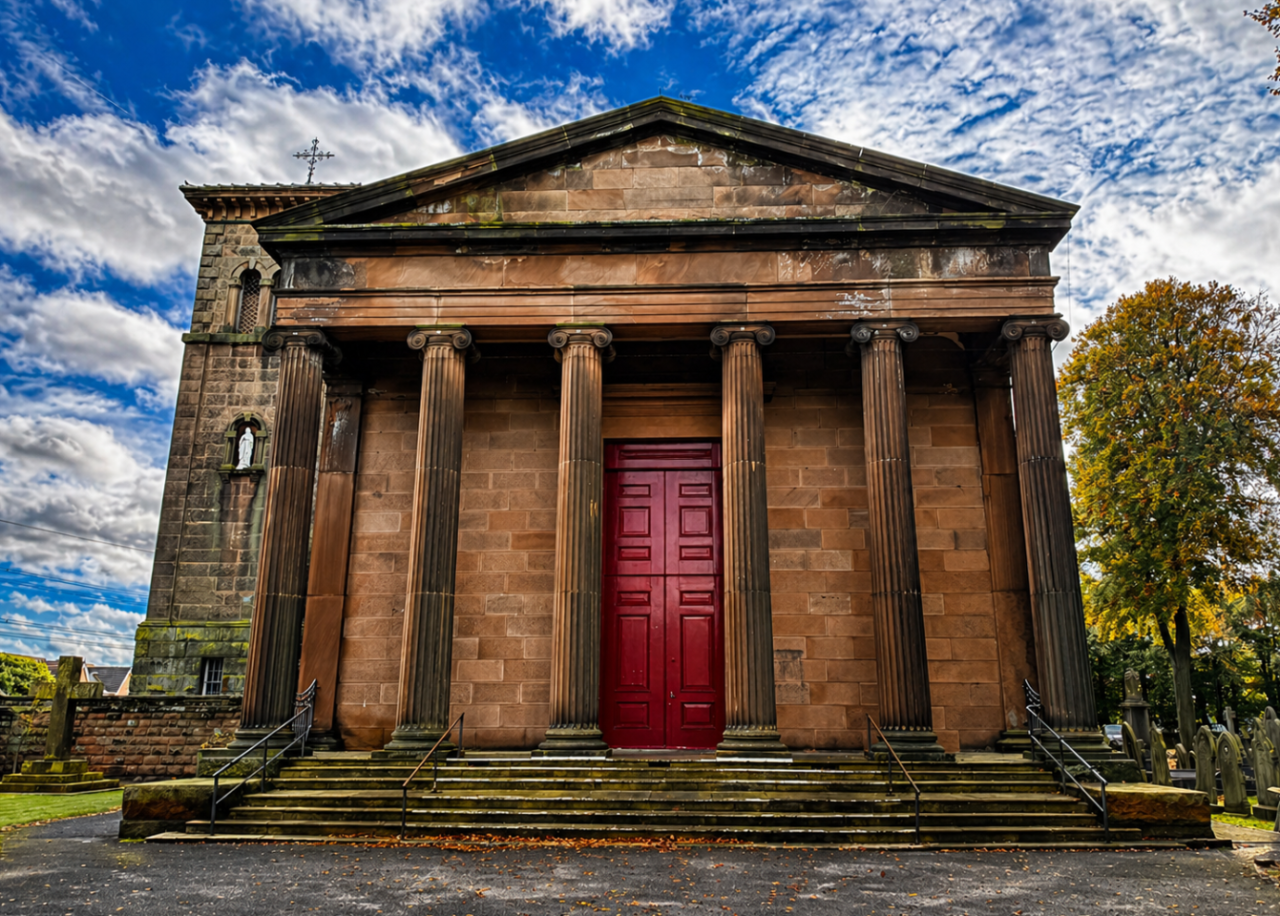
Structural and Material Failure – Bell Tower Investigation & Restoration
Challenge
Urgent concerns were raised regarding progressive deterioration and instability within the high-level masonry of a listed church bell tower. The structure, constructed in traditional sandstone, exhibited significant material decay, open joints, and localised displacement — particularly around mullions and load-bearing elements.
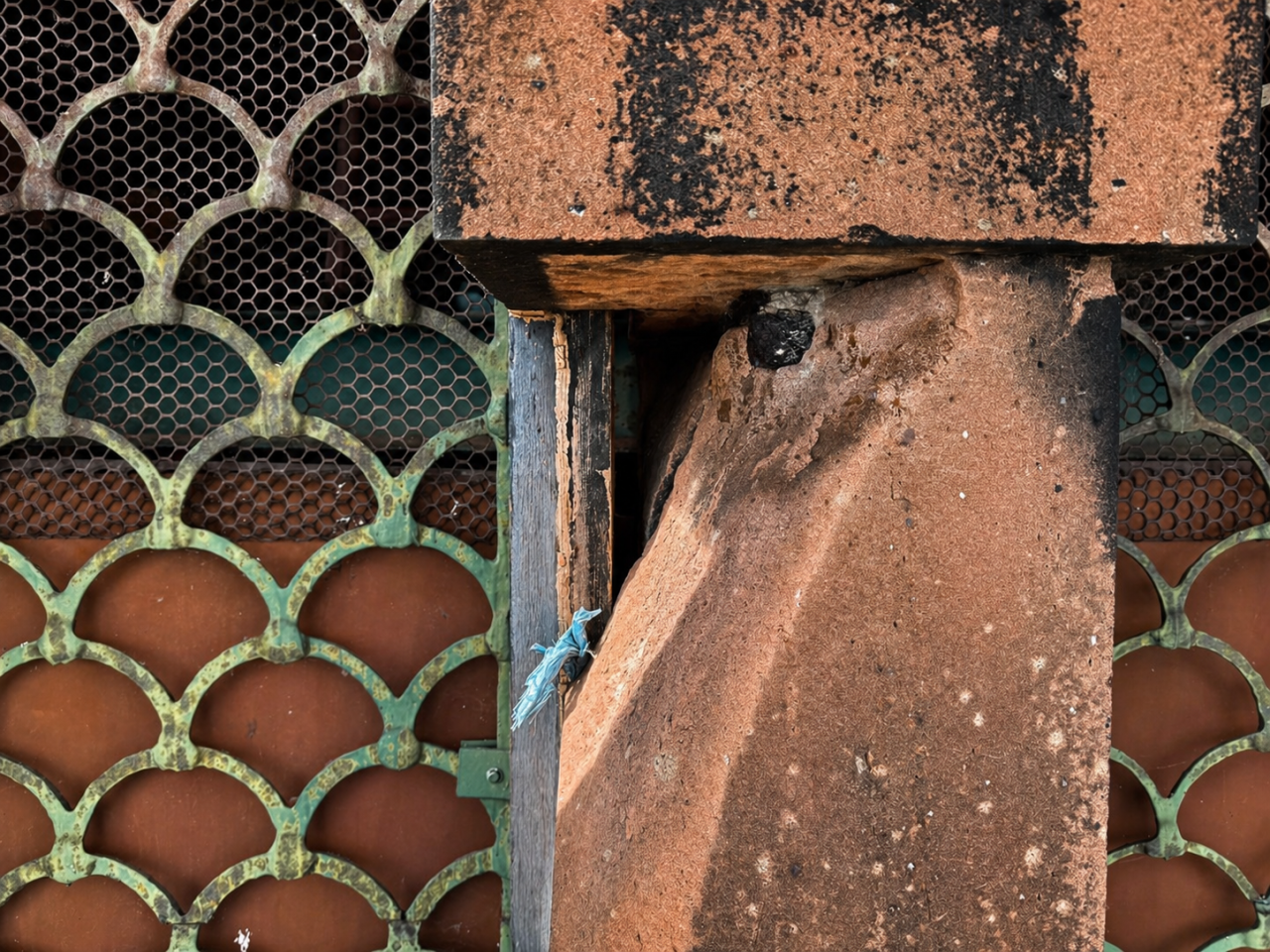
Inspection identified that historic ferrous cramps had corroded and expanded, resulting in cracking, displacement, and failure of the surrounding ashlar masonry — a well-established failure mechanism in historic structures.
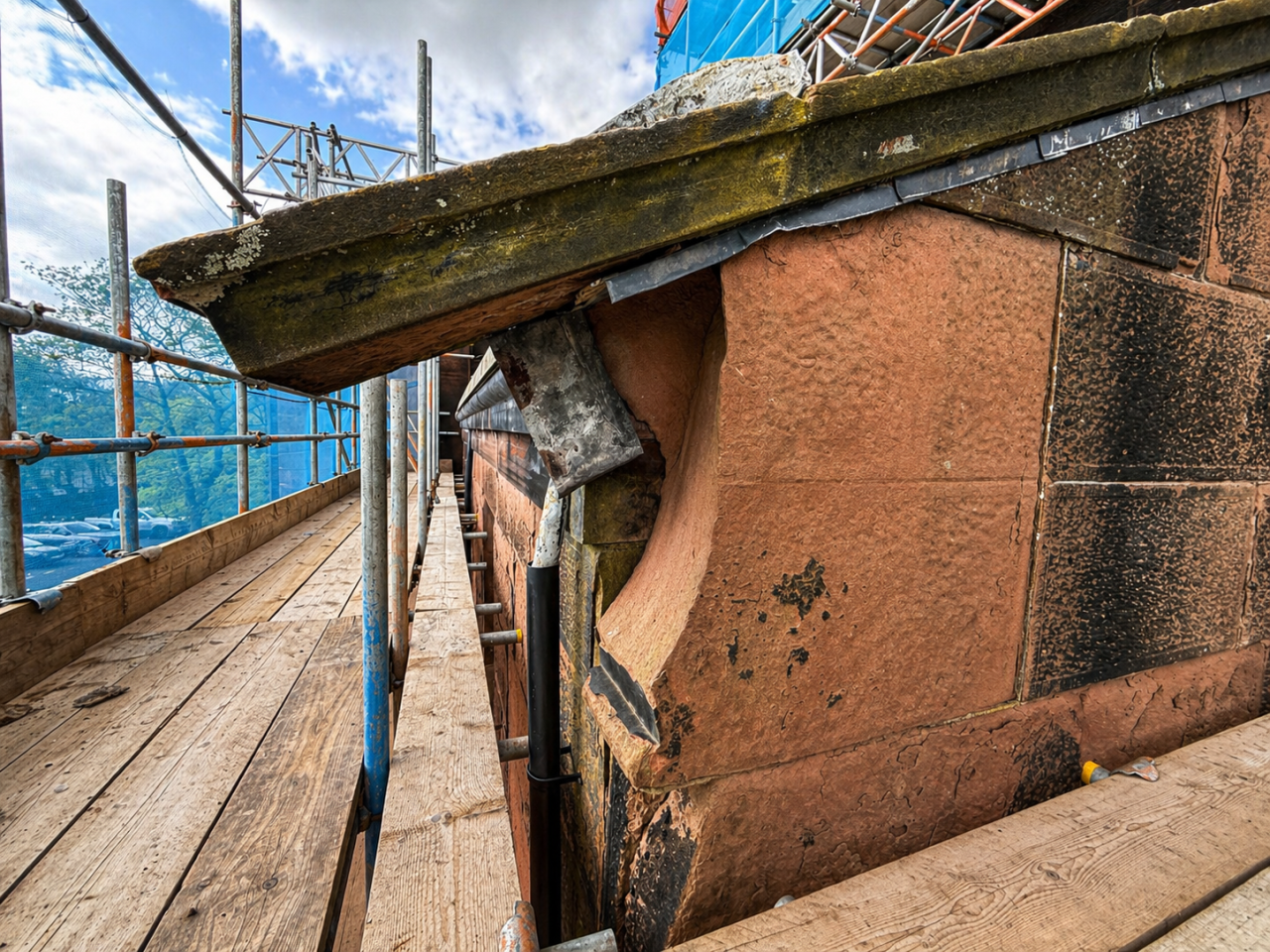
The tower roof covering was also found to be in poor condition. The existing leadwork exhibited fatigue cracking, failed joints, and evidence of historic patch repairs, with inadequate laps and detailing allowing water ingress. This had contributed to ongoing moisture penetration and accelerated deterioration of the masonry below.
The bell installation had been altered historically and, while typical, may have influenced load distribution within the structure over time.
Given the height, exposure, and public safety risk, immediate investigation was required to determine the extent of deterioration and define a safe, conservation-led repair strategy.
Solution
We undertook a comprehensive programme of investigation and technical assessment, including:
- Intrusive investigations to exposed masonry
- Drone surveys to safely inspect high-level defects
- Detailed defect mapping and condition analysis
- Structural appraisal of affected elements and load paths
- Monitoring to inform intervention strategy
The sandstone was identified as geologically variable, with inclusions contributing to differential weathering and localised failure.
A conservation-led repair strategy was developed, including:
- Careful dismantling of unstable masonry
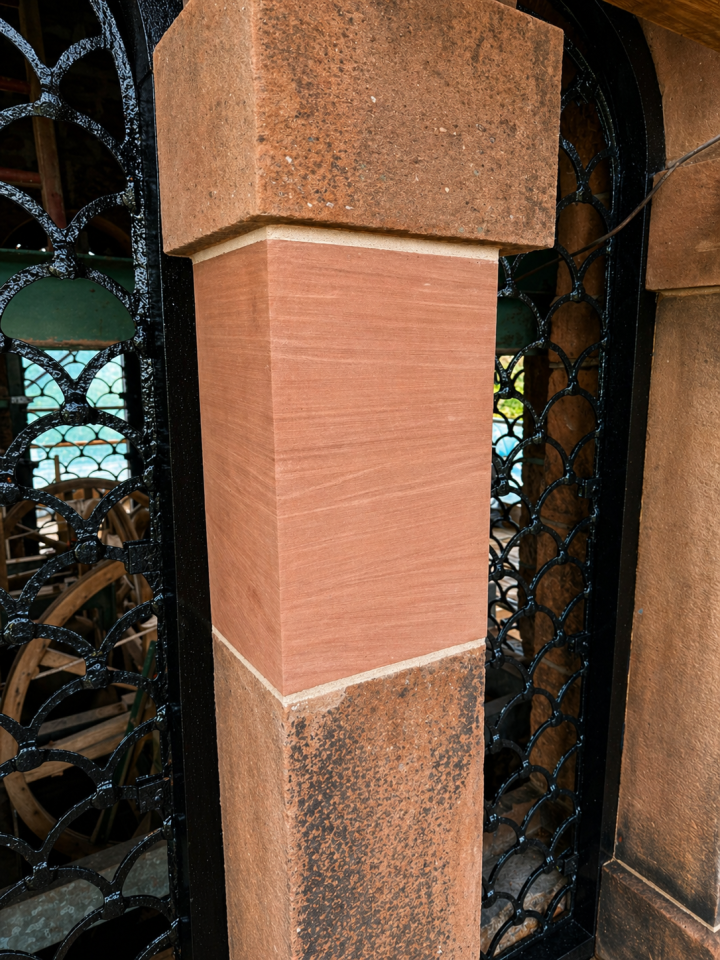
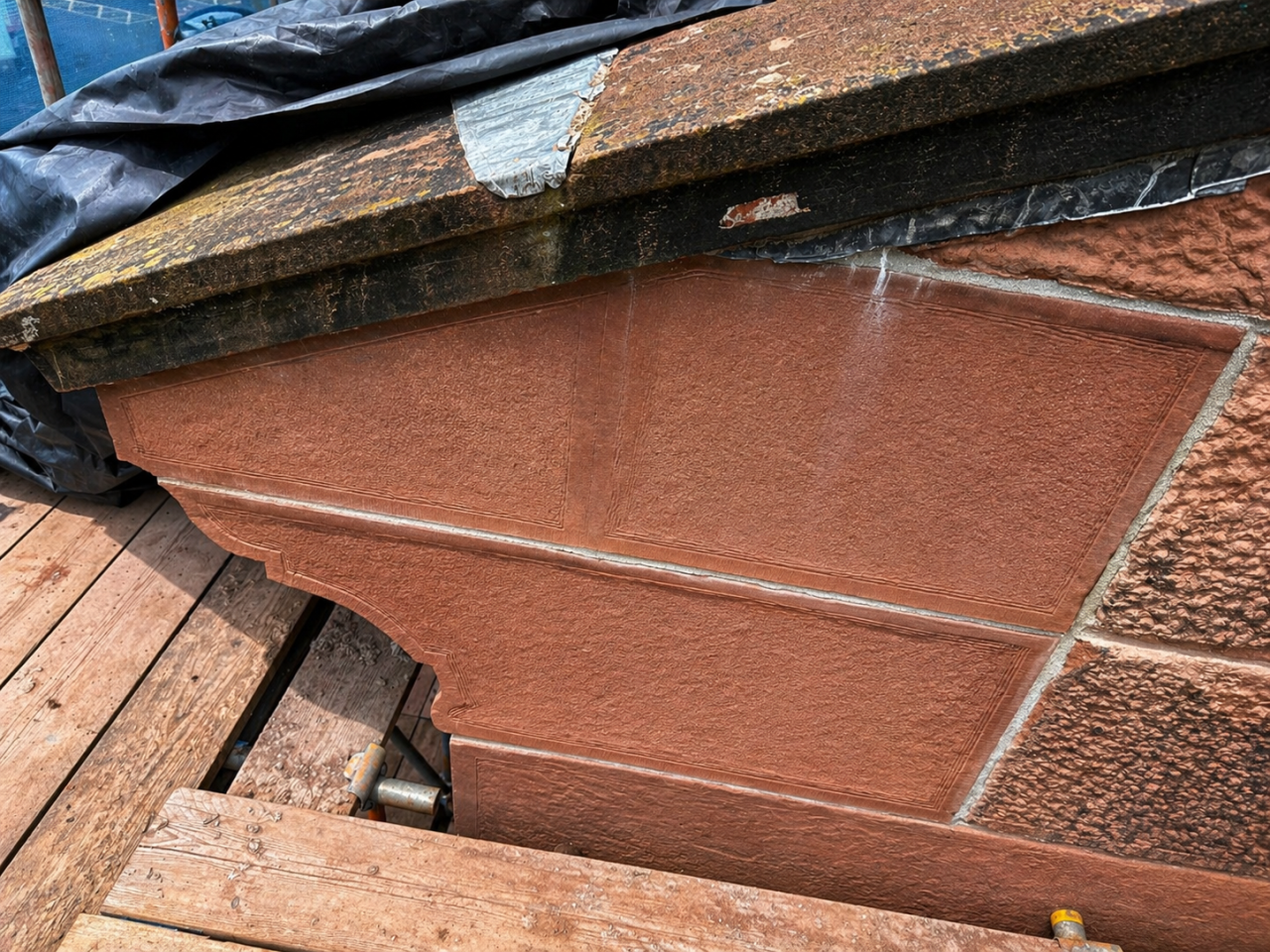
- Indented replacement and repair of ashlar stonework
- Removal of corroded ferrous cramps and installation of non-ferrous replacements
- Full renewal of the lead roof covering in accordance with traditional detailing
- Improved laps, joints, and weathering details
- Associated high-level repairs using appropriate lime-based materials
We provided full design, specification, contract administration, and project management, coordinating specialist conservation contractors throughout.
Outcome
The project delivered long-term stabilisation of the bell tower, addressing both visible defects and underlying causes of failure.
Key outcomes included:
- Elimination of instability caused by corroded embedded ironwork
- Repair and replacement of deteriorated sandstone using compatible materials
- Renewal of lead coverings, restoring weather-tightness
- Prevention of further water ingress and associated decay
- Preservation of architectural and historic character
The works secured the tower’s ongoing structural integrity, durability, and safe use, in full accordance with conservation principles appropriate to a listed building.